How to Keep your Summer Garden Pest Free: Aphids
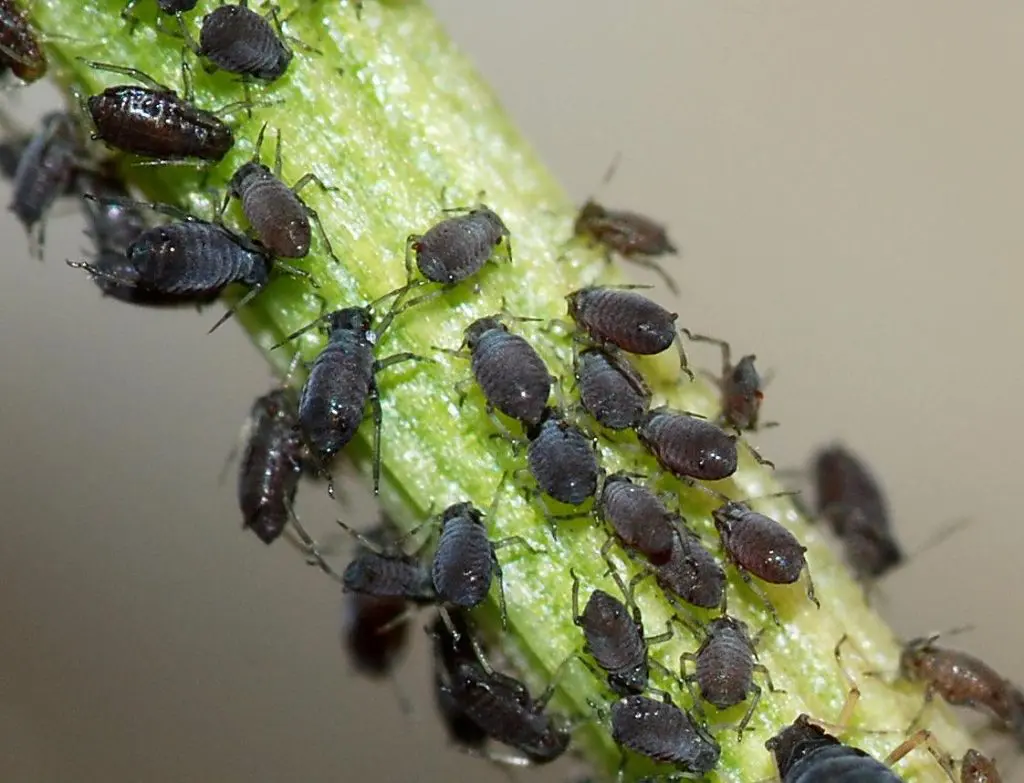
Aphids are tiny insects that are found on the underside of the leaves or on the stems of infested plants. They come in a variety of different colors, most of which prefer to feed on different types of garden crops. These little bugs are one of the tougher opponents when trying to keep your summer garden pest free. They can be difficult to contain because female aphids do not need a male aphid to reproduce. This means that an entire colony of aphids can be created by just one single aphid. Aphids do not produce their own amino acids, so they feed on crops in order to suck the sap out of them to help their bodies create the amino acids that they need to mature and survive.
What do they do?
When an aphid feeds on a plant, the toxic saliva that is left on the plant is what causes the leaves of infested plants to yellow and curve inward and downward. In addition to damaging plants with their toxic saliva, aphids also cause damage by leaving behind the honey dew that they produce which can often lead to a black mold infestation on the plant even after an aphid colony has moved on to the next crop.
The way that aphids produce honey dew has also allowed them to create a unique relationship with ant colonies. The ants will “milk”, or feed off of, the honey dew that the aphids produce and in return the ants provide the aphids with protection from predators. Some aphids have wings, making it easy to transfer diseases from plant to plant. Aphids that do not have wings have been known to hitch a ride on the back of ants with wings, and even other winged aphids, to achieve the spread of the aphid colony infestation.
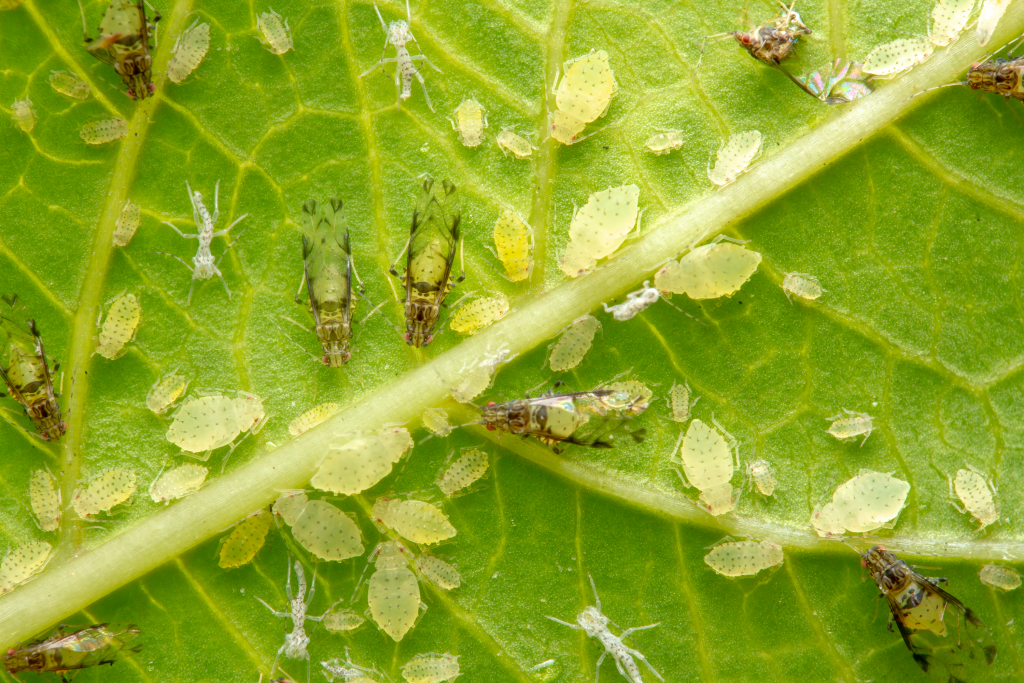
Signs Your Garden May Be Suffering:
- Yellowing leaves that curve into the shape of a taco and downward
- Ant colonies crawling around your plants and/or garden beds
- Visible honey dew or black mold on leaves
Pesticide treatments should always be avoided if there are natural alternative options. Here are some natural ways you can try to prevent and get rid of an aphid infestation before turning to chemical treatments:
- Check the undersides of the leaves of your plants often: Aphid infestations always start with just one infested leaf. If you find that leaf early and remove it, you could avoid a wider infestation
- Remove all weeds up to 5-10 ft away from crop/garden beds: Aphids like to feed on invasive weeds. Removing the weeds that surround your garden will help prevent aphids from hopping over into your garden beds.
- Lady Bugs. Releasing lady bugs into your garden will provide a natural predator to take care of your aphid infestation that will not harm your garden
- Plants that repel aphids. Planting plants that repel aphids within your garden beds will help keep aphids out of your garden bed all together. Some plants that help repel aphids include: Zinnias, Dahlias, Verbena, and Tuberous Geraniums
- Datenacious Earth. A blend of microscopic shells that cover your plants so when aphids and ants crawl over them they get cut up and they die. This is also a good source of calcium for your plants.
If a slightly more aggressive treatment for your aphid infestation becomes necessary, try these:
- Neem Oil
- Cast Iron Soap
- Maragold
- Cow Urine
- Garlic Cloves
- Cinnamon
If a chemical solution for your aphid infestation to keep your summer garden pest free becomes necessary, try these:
- Pyrethrin
- AzaMax