How to Keep your Summer Garden Pest Free: Spider Mites
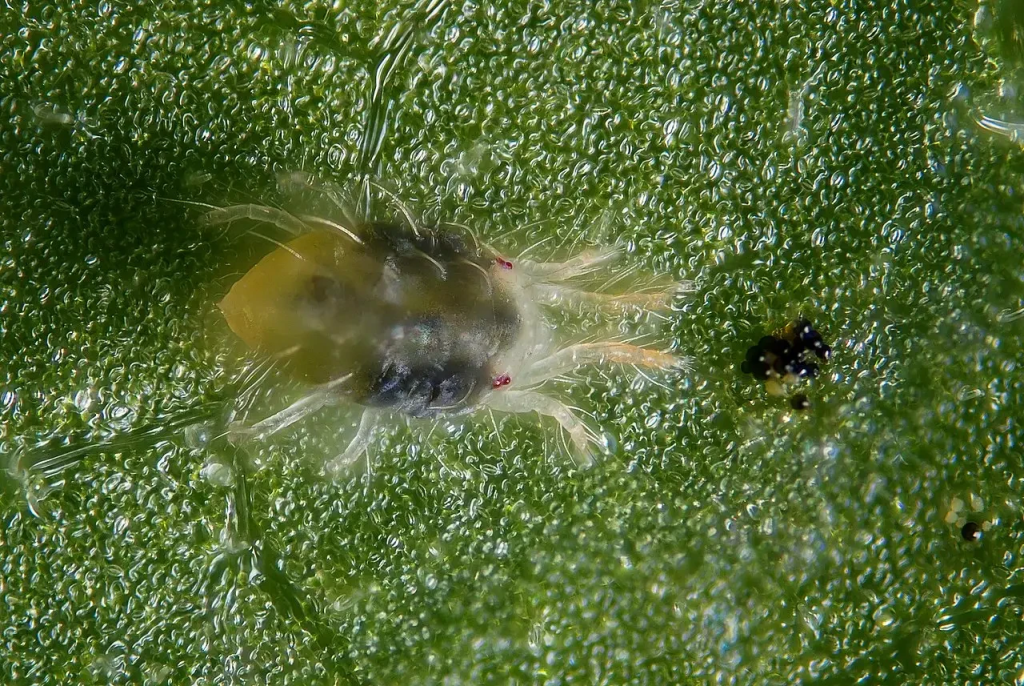
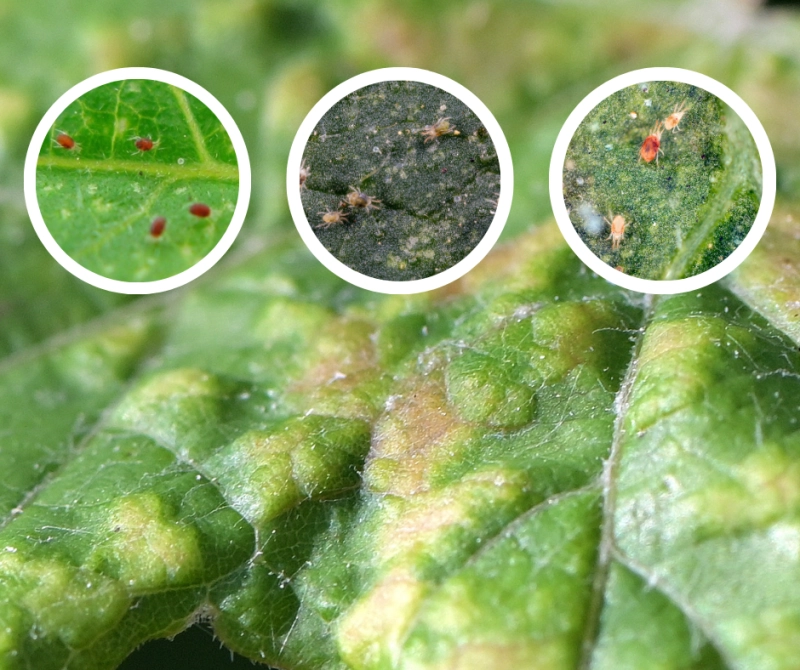
Spider mites are tiny little arachnids that can invade both indoor and outdoor plants, and can be a variety of different colors including red, yellow, orange, green, and brown. During the egg and larvae stages of the spider mite life cycle, they can even be completely clear in color. The appearance of the spider mite itself can often be irrelevant due to the fact that these insects are only about 1/50 of an inch in size. That is why it is so important to be aware of the signs of a spider mite infestation, even if you are not necessarily able to see any of them with your naked eye.
Life Cycle of Spider Mites
Before we dive into how to identify a spider mite infestation, it is important to first talk about the life cycle of a spider mite to be able to fully understand just how quickly an infestation can start and spread. The life cycle of a spider mite only lasts about 14-21 days. They spend 2-4 days as an egg, 2-4 days as larvae, and can live up to about 14 days as an adult. During those 14 days, a single spider mite can produce 100s of eggs. This is because spider mites can produce both sexually and asexually.
Because spider mites are so small, an infestation in one section of a garden could be spread all the way to the opposite side just by the wind blowing. This is why it is so important to check on your plants as often as possible to catch signs of a spider mite infestation as early as possible to avoid the spread of it.
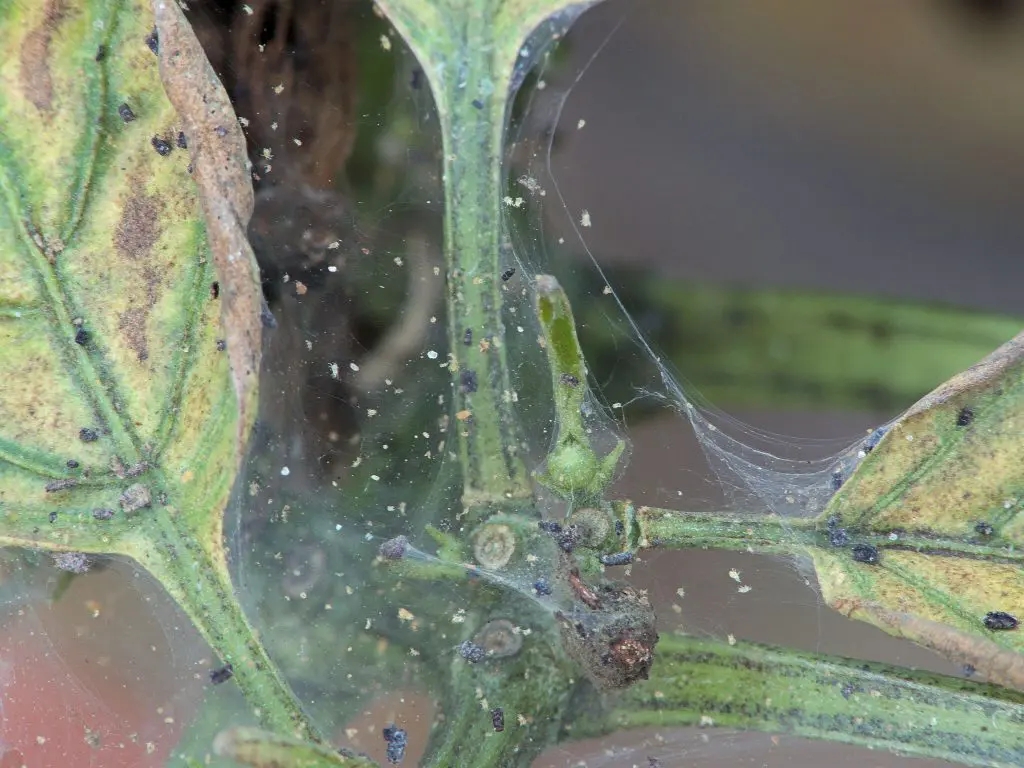
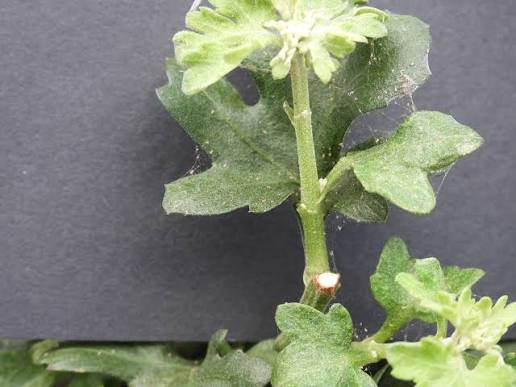
When spider mites invade a plant, they live on the undersides of the leaves and kill the plant by biting into each individual cell of the leaf and sucking out all of the plant tissue, sap, and chlorophyll within those cells. This causes infected plant leaves to begin to appear speckled, with tiny little white dots that cover each individual leaf. These little dots are the dead plant cells within the leaves becoming visible, and they quickly change from a speckled appearance, to a yellow/gold discolored appearance, to then turning brown and falling to the ground. Other signs of a spider mite infestation include fine webbing along the stems and/or the undersides of the leaves.
How To Treat Them
If you have identified a spider mite infestation on an indoor plant, or even a minor outdoor plant infestation, it is definitely recommended to try an at home DIY soapy water and rubbing alcohol solution to get rid of the spider mites before turning to chemical solutions.
For this method, put equal parts water, dish soap, and rubbing alcohol into a spray bottle and spray down the infected plants, and then wipe down the leaves with a cloth. This will need to be repeated periodically to maintain results. For more intense infestations, you can use Safer Insecticidal Soap, or Green Earth Horticulture Oil Insect Spray. These products kill adult spider mites and smother the eggs to kill the next generation reliably.
When using a chemical solution, always be very careful to keep the chemicals isolated to the infected areas. Make sure you never get any chemicals on the flowers of infected or surrounding plants to avoid harming pollinators. Late in the afternoon/evening hours is the best time to apply a chemical solution.
Prevention
To prevent a spider mite infestation from ever occurring, there are a few things that you can do. First, you can keep your plant’s environment consistently moist. Spider mites thrive in dry and hot environments. For indoor plants, you can increase humidity with an indoor humidifier. For outdoor plants, you can use the misty setting on your hose to mist your plants as often as possible.
Because spider mites are so small and early damage can be so difficult to spot, another prevention method would be to isolate all new indoor and outdoor plants that you bring home for about 14-21 days (the length of a spider mite life cycle) to ensure that you are not incorporating an infected plant to your existing collection that could spread to surrounding plants. The most commonly infected garden plants in our area for spider mites include raspberries, melons, cucumbers, beans, roses, and fruit trees. So if you have any of those plants in your garden, keep a close eye on them and their surrounding plants this summer to avoid having to deal with your own spider mite infestation.