How to Keep your Fall Garden Pest Free: Scale Insects
Scale Insects are an extremely common garden pest that like to feed off of a large variety of plants, meaning that unfortunately, no plant is safe from a scale insect infestation. Scale insects can infect plants whether they’re in your garden, in your greenhouse, or even in your home. There are thousands of species of scale insects, making them one of the most common plant pests for gardeners and/or plant parents to encounter.
Scale Insects Life Cycle:
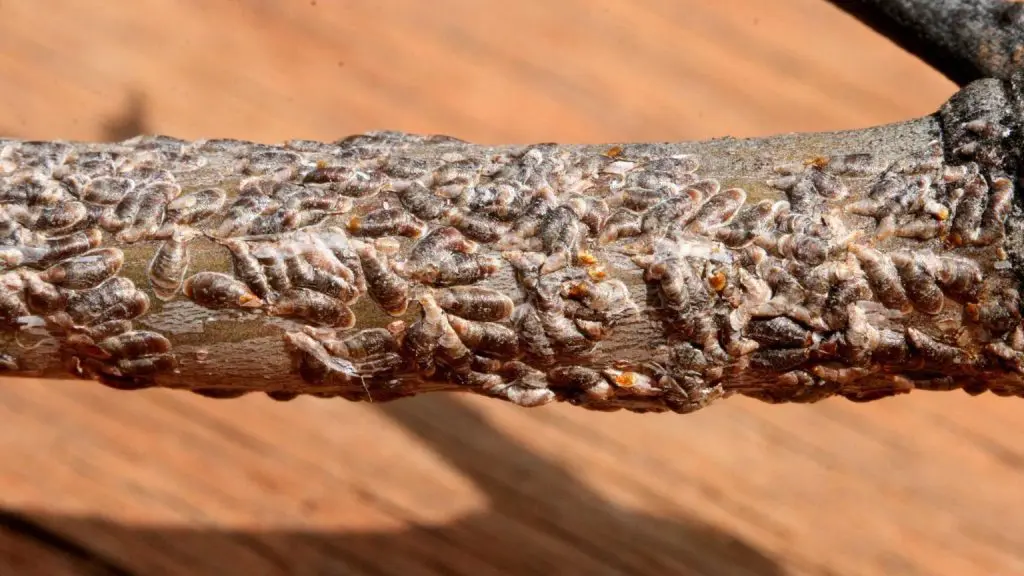
Scale insects can be difficult to identify because they don’t look very much like insects at all. If you didn’t know what a scale insect looks like, you may mistake it for a plant disease rather than a pest infestation. Scale insects protect themselves with either a soft covering or a hard armored covering that can sometimes make them look like mold. Soft scale insects prefer to feed on indoor tropical plants or greenhouse subtropical plants.
They appear more oval shaped, they are lighter in color than armored scale insects, they are larger than armored scale insects, and they have downy waxy covering all over their body that is actually part of the insect. Armored scale insects are smaller, they are more beige/brown in color which can help them camouflage in branches, and the shape that they take can resemble barnacles, or they can look more like flat discs.
Most adult scale insects are immobile for most of their lives since they have no wings or legs. Female adults lay their eggs underneath their protective covering in the spring, and they hatch and disperse as the phase of their lifecycle where they are called ‘crawlers’. Crawlers do have legs, and they use them to find a spot on the plant to feed off of. Once they find that spot, they attach themselves to it with their sharp mouths, and they begin to grow their protective covering and lose their legs in the process. They will spend their lives feeding on this spot as this same lifecycle continues.
How Scale Insects Feed:
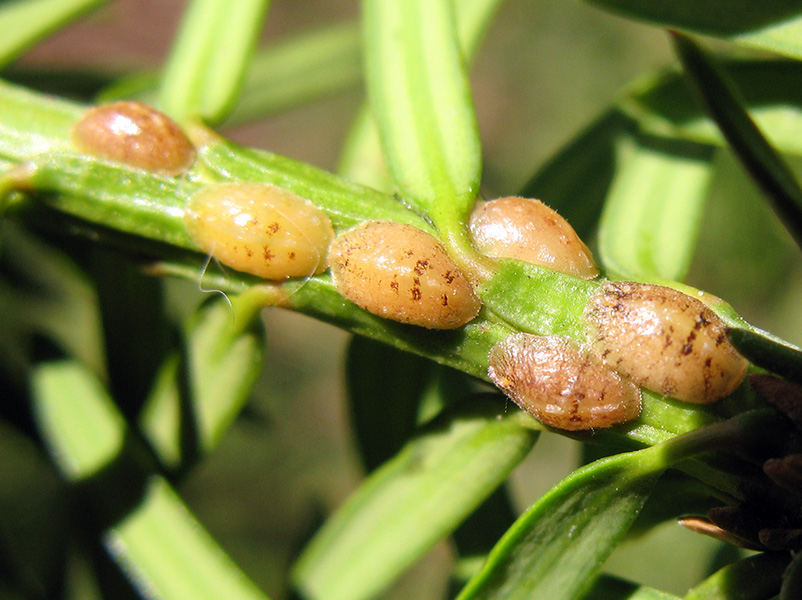
All scale insects feed off of plants by attaching themselves to either the stems/branches or the leaves of a plant with their sharp mouths and suck out all of the nutrients like xylem and the phloem. They spend their lives feeding off of this one spot.
Signs of a Scale Insect Infestation:
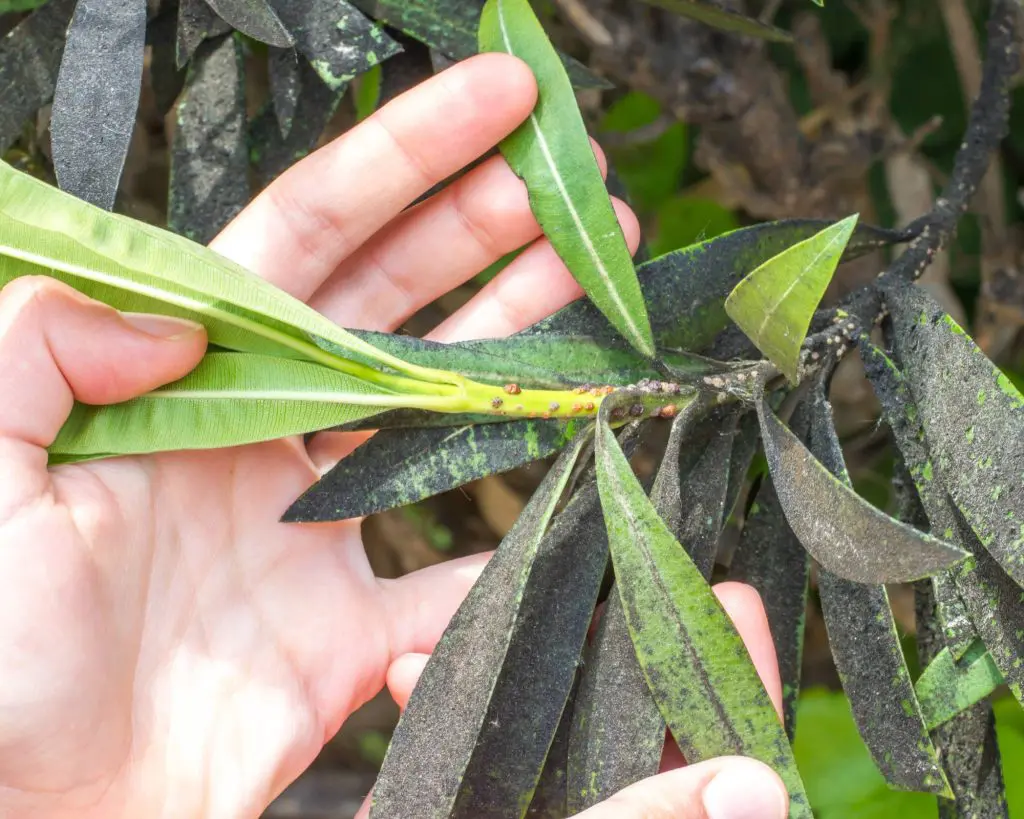
The presence of a black sooty mold/residue is one of the main signs to look for when correctly identifying a scale insect infestation. Scale insect infestations can often be difficult to properly identify because so many of the damage symptoms can look like it is being caused by other factors like poor nutrition or a virus that is weakening the health of the plant and causing it to become discolored or even begin to lose foliage.
Looking for the presence of that black sooty mold/residue is one of the only symptoms that only appear with a scale insect infestation. Another sign to look for that is specific to scale insect infestations is the presence of wasps. If you notice wasps like to hangout around or on the leaves of your plants, you are most likely witnessing the wasps feeding on the scale insects that have infested your plant.
How to Treat Scale Insects:
When treating a scale insect infestation, the trick is to target them while they are in their ‘crawler’ stage of life, when they are most vulnerable and unprotected. It can be incredibly difficult to effectively eliminate adult scale insects that have already developed their protective covering with chemical treatments.
If you have caught a scale infestation early and have only found a few on your plant here and there, it is possible to hand pick them off of your plant and isolate the plant while nursing it back to health to avoid spreading the infestation to any other plants. For more severe infestations you can use horticulture oil, neem oil, or horticulture soap to treat your infected plant.
Be prepared to keep a close eye on your plants that you are treating for a scale insect infestation and possibly applying multiple treatment applications before the plant can be considered fully treated and safe from these fall garden pests.