Lawn Shield Program
Our Lawn Shield Program is built on the principle of proactive protection—layering targeted treatments throughout the year to fortify your turf, block invasive weeds before they emerge, and guard your lawn against damaging pests. Each Shield Step strengthens the defensive line, ensuring your lawn stays resilient, healthy, and battle‑ready through every season. The program includes 9 treatments for Centipede lawns and 11 treatments for Bermuda, Zoysia and St. Augustine lawns.
Shield Step 1: Pre-Emergents
Every strong lawn defense begins with a pre‑emergent barrier. Pre-emergents create a soil barrier to help prevent crabgrass germination in the spring and annual bluegrass (Poa annua) in the winter. The reason for this is that they are two of the most aggressive, disruptive, and costly weeds in warm‑season lawns — and once they germinate, they’re dramatically harder (and sometimes impossible) to control.
Shield Step 2: Nitrogen Fertilization
Nitrogen fortifies your lawn’s armor—boosting color, density, and growth so the turf can defend itself against weeds, heat, and everyday wear. Centipede lawns require two nitrogen applications per growing season, spaced 8–10 weeks apart. Bermuda, Zoysia, and St. Augustine lawns perform best with four applications, spaced every 4–6 weeks.
Shield Step 3: Post-Emergent Weed Control
Post‑emergent weed control strikes down weeds that have breached the barrier—removing active growth and restoring your lawn’s defensive line. Because some weeds, such as nutsedge and dollarweed, are more difficult to control, they require follow‑up applications to achieve good, lasting suppression.
Shield Step 4: Insect Control
Insect control reinforces your lawn’s defensive line by targeting the most destructive warm‑season pest: mole crickets. These insects tunnel through the soil, sever roots, and loosen the turf, causing thinning, spongy areas, and widespread damage. A properly timed insecticide application stops active mole crickets and prevents nymphs from establishing, protecting your lawn’s structure, density, and long‑term health.
Additional Shield Steps
Other insect or disease problems can occur throughout the year, but these can only be treated once they’re noticed, as they cannot be prevented with pre‑emergents. However, maintaining a strong, dense stand of turf naturally reduces the likelihood and severity of these issues. As a result we offer these services when needed:
Mosquito Control
Mosquito control builds an essential protective barrier around your property—targeting adult mosquitoes and the areas where they rest and breed. By treating dense vegetation, shaded zones, moisture pockets, and other high‑risk sites, we dramatically reduce biting activity and interrupt the mosquito life cycle. The result is a safer, more comfortable outdoor space for your family, pets, and guests throughout the season.
Insecticides/Miticides for Other Lawn, Tree and Shrub Pests
Herbicides for Targeted Weed Control
Fungicides for Lawn, Trees, and Shrubs
Tree/Palms and Shrub Fertilization
Soil Testing
Soil testing evaluates the strength of your lawn’s foundation—revealing pH balance, nutrient weaknesses or excesses, and the soil’s cation exchange capacity. With this information, we can tailor your Lawn Shield program to deliver exactly what your turf needs to stay fortified all year long.
Nematode Testing
Nematodes are microscopic, soil‑dwelling roundworms that feed on turfgrass roots, reducing the plant’s ability to absorb water and nutrients. When populations become high, they cause thinning, yellowing, weak growth, and patchy decline—especially in sandy soils common along the Carolina coast. Because nematodes damage roots directly, lawns often appear drought‑stressed even when properly watered. When a postive test result occurs the lawn can be treated with a Nematicide.
Grass Types
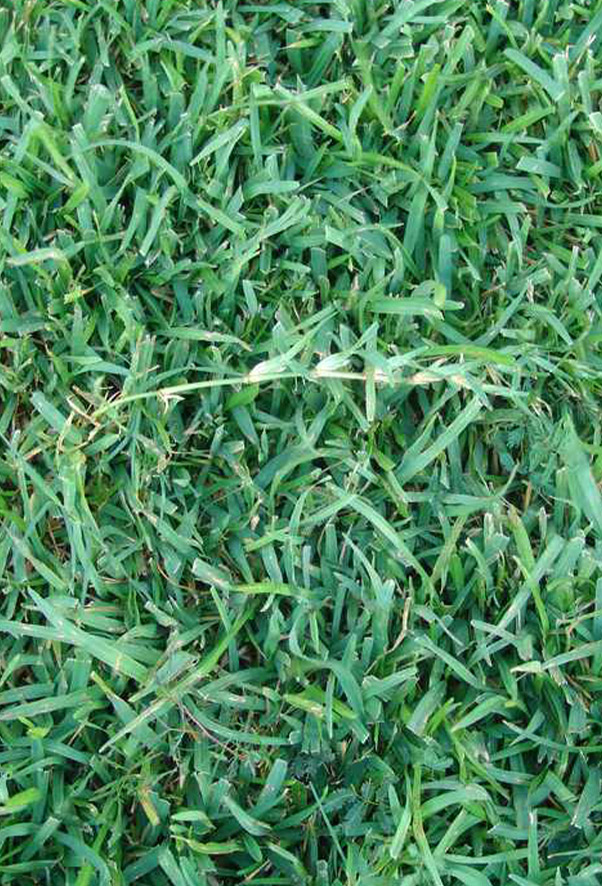
Centipede Grass
Features: Known as the “lazy man’s grass,” Centipede is a low-maintenance option with a slow growth rate and a light green color. It thrives in sandy, acidic soils and requires minimal fertilization.
Benefits:
Drought-tolerant and thrives in full sun.
Forms a dense, weed-resistant turf.
Requires less frequent mowing due to its slow growth.
Ideal for homeowners seeking a low-maintenance lawn.
Fertilizing: Centipede only requires 2 low nitrogen fertilization applications per growing season. Too much nirtrogen can damage Centipede’s delicate root system
Other Tips: Keep an eye on thatch buildup and dethatch when necessary, as it can become an issue over time.
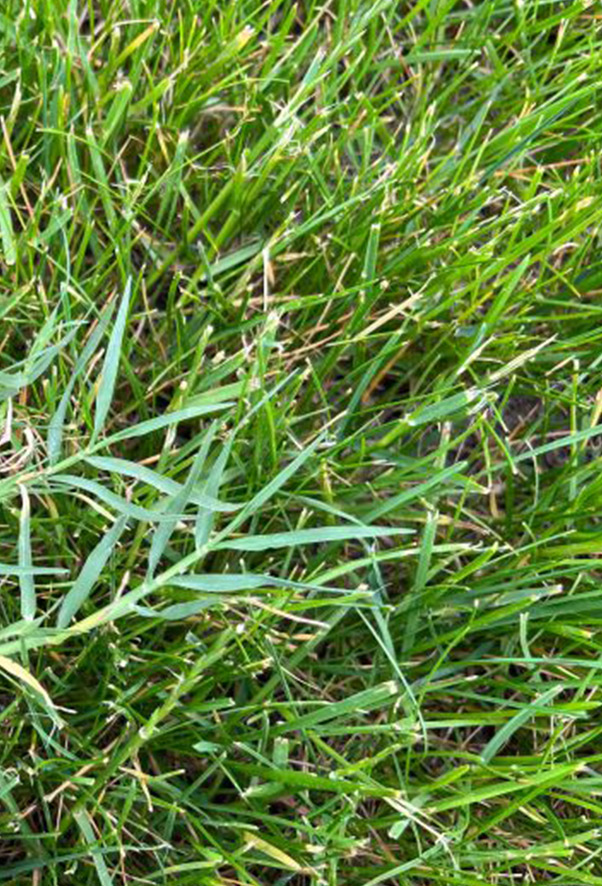
Bermuda Grass
Features: Bermuda grass is a fast-growing, durable grass with fine-textured blades. It thrives in full sun and is highly heat-tolerant.
Benefits:
Excellent for high-traffic areas like sports fields and playgrounds.
Recovers quickly from damage due to its aggressive growth.
Drought-resistant and thrives in sandy soils.
Creates a dense, lush lawn that suppresses weeds.
Fertilizing: Fertilize monthly during the growing season with a balanced nitrogen-rich fertilizer.
Other Tips: Aerate the soil annually to improve drainage and promote healthy root growth.
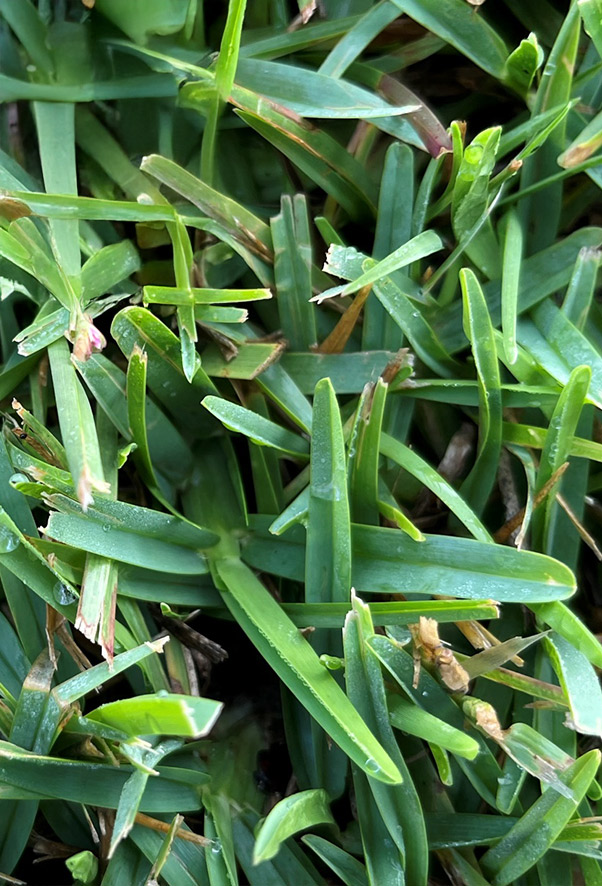
St. Augustine Grass
Features: St. Augustine grass has broad, flat blades and a coarse texture. It is shade-tolerant and thrives in warm, humid climates.
Benefits:
Ideal for coastal areas due to its salt tolerance.
Grows well in both sunny and partially shaded areas.
Forms a thick, carpet-like lawn that resists weeds.
Provides a lush, dark green appearance with proper care.
Fertilizing: Feed every 6–8 weeks during the growing season with a fertilizer that’s high in nitrogen.
Other tip: Watch for pests like chinch bugs (from July thru September), which are a common problem for St. Augustine. Consider applying a pest control treatment if necessary.

Zoysia Grass
Features: Zoysia grass is a dense, fine-textured grass that grows well in both sun and partial shade. It is slow-growing but highly resilient.
Benefits:
Tolerates drought, heat, and moderate foot traffic.
Requires less water and fertilizer compared to other grasses.
Forms a thick turf that resists weeds and pests.
Retains its green color longer into the fall season.
Fertilizing: Fertilize 2–3 times during the growing season with a balanced fertilizer.
Other Tips: Due to its slow growth, it’s prone to thatch buildup. Dethatch and aerate when needed to maintain healthy turf.